So Sorry, Not Sorry, Grim Reaper
- Aug 16, 2025
- 4 min read
Updated: Aug 16, 2025
“Do the thing you fear, and the death of fear is certain.” – Ralph Waldo Emerson
For many of us as we grow older, fear takes on new shapes. Not the thrill of roller coasters or haunted houses, but quieter, heavier fears. Fear of becoming frail. Fear of losing our memory. Fear of being a burden. Fear of losing friends, outliving loved ones, being forgotten. These are not the fears of children. They are the fears that tap us on the shoulder in the quiet hours, whispering, “What will happen to you?”
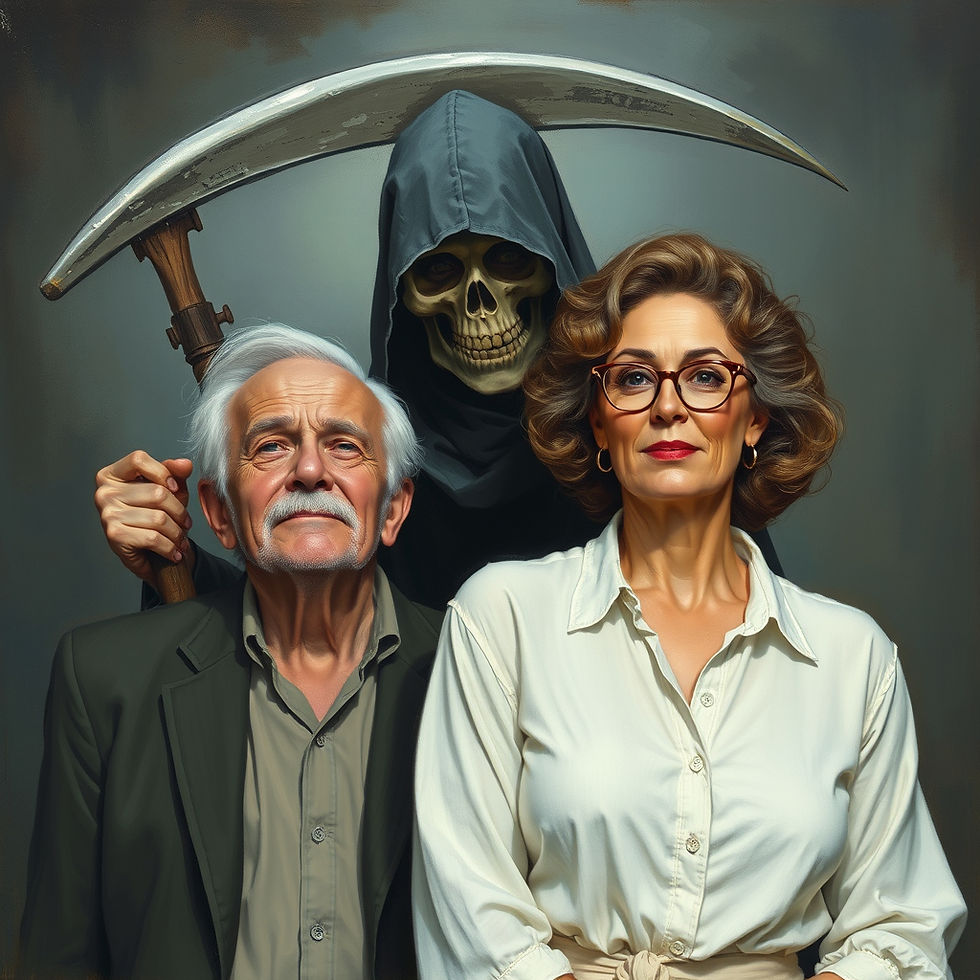
I'm not sure we need to kill our fears. They may have their place. But why not shrink them down to size. How? Take a step toward them. Action often brings fear out of the shadows and into daylight, where it looks less monstrous.
If we fear frailty: we can begin with a simple daily walk, or gentle exercises with light weights, or stretching. Each small choice helps our bodies stay stronger, longer. Get in a SAIL (stay active and independent for life) class! I am told there are more SAIL volunteers in Washington than in any state. I help with one in Cashmere. They are all over the Valley. Get certified as an instructor yourself!
If we fear losing memory: we can engage our minds in book clubs, picking our old music instrument back up or trying out a new gig - learning something new. I sat in on a little writing group that had sprung up in Cashmere. They were reading their pieces and giving each other feedback. Every bit of new learning strengthens brain pathways.
If we fear isolation: we can reach out—a phone call, a card game, when you get together with others, you’ll hear new opportunities. Yesterday I heard about fun, cutthroat (kidding, but evidently, according to my sources - thank you, Gina, they do make it especially fun) Bingo on Tuesday nights at Yonder Cider in Cashmere. Dare to step inside a church on Sunday. Or take a really daring step and join a social dance club. And there are so many ways to volunteer.
If we fear being forgotten: we can write down family stories, record voice notes for grandchildren, or plant kindness in the community around us. Legacies don’t have to be grand—they can be small deposits of love.

But what about when there isn’t a step to take? What about when the diagnosis is clear, the frailty undeniable, the loss irreversible? Here, action is not the path. Here we learn a gentler courage—the courage to sit with fear rather than wrestle it.
Again, we don’t have to get rid of fear. We can acknowledge it as part of being human.
That begins with pausing...
Noticing where fear shows up in the body—maybe a knot in the stomach, a tightness in the chest.
Placing a hand over the heart.
Taking a slow, steady breath.
Whispering to ourselves, “Here is fear. It belongs to life as a human. I can hold it.” If it feels right, you might invite a spiritual being such as Jesus to be with you.
As poet Rainer Maria Rilke once said, “Let everything happen to you: beauty and terror. Just keep going. No feeling is final.” This human life is full of 10,000 sorrows and 10,000 joys as some say. It offers us richness of experiences. (Click on highlighted link to see an earlier post on the psychologically rich life.) And sometimes it is hard to be a human on this little blue dot whirling and spinning about in space. And sometimes it is incredibly beautiful. We can open ourselves to its fullness. With practice.
Let me tell you about a woman I’ll call Ruth. She was in her early eighties when I first got to know her. She had lived a life full of zest and community involvement. Her biggest fear wasn’t really about being terminal, dying—it was losing her ability to contribute. “I can’t stand the thought,” she said, “of being stuck in a chair, unable to move, unable to think straight. What good would I be then?”
Ruth’s fears mirrored some of those fearful thoughts that my husband, John, and I have said out loud to each other when we take the time to slow down. We did this last night at our family cabin. It felt freeing to me. Just to say and to hear all those fears out loud. I guess it took the sting out of the fears that be(e).
The next day we kayaked in the early hours of the day, life felt especially big and rich and full. Afterwards, I could even do something, I haven't been able to do in years. I got myself out of the kayak all by myself without going in the drink. (And I got a rousing cheer from John.)

Ruth did eventually name the big fear out loud: “I’m afraid of being useless.” She noticed the heaviness in her chest when she said it. She placed her hand over her heart and breathed slowly.
And she practiced, gently, the idea that even if one day she could do very little, her presence—her smile, her kindness—would still be a gift.
“I’m not fearless,” she told me once. “But I’m feeling freer.”
Facing fear isn’t about becoming fearless—it’s about becoming free. Free to act. Free to breathe. Free to live a human life in all its joys and sorrows all the way to the end. Too bad for the lurking grim reaper if he was hoping for a big thrill. Not going to happen. Not today anyway.
How might we journey together to The Good Life by facing our fears and living free?


Comments